The Truth About Healing: It Changes You, and Then It Changes Again

You know what’s funny?

I think I finally have it figured out.
Not life, not everything, but this. This version of me. This season. This phase.

That’s the thing about healing, or coming into yourself: it changes. It comes in phases. And I’m finally learning to be okay with that. To actually feel content inside each phase, even if I know it won’t last forever. To process as I go, not dig for meaning in every crack.

The truth is, I’ve spent so much of my time lost.
Lost in trauma.
Lost in emotion.
Lost in numbness.
Lost in grief. (I still grieve.)
Lost in trying to figure out who I am and why all of this has happened.

But once I combed through the hardest parts of my life,
Once I evaluated (maybe over-evaluated),
cried into my pillow,
stayed up all night for too many nights,
screamed on the bathroom floor,
and had to walk out of the room after looking at my children,
Once I did all of that, and finally accepted life as it is,
something in me settled.

I realized: this is what life is.

It’s not perfect, it’s not fair, and I don’t get to control the most devastating things.
But I do get to be here.

And I realized that my purpose…
It’s not a job or a title or some fancy calling.

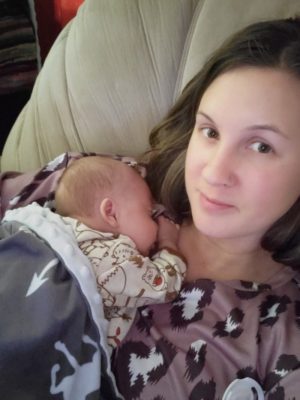
My purpose is to be a mother.

I’ve always known it. But I had to live through hell to believe it fully.
I had to stop forcing it to be anything more.

And maybe it is more.
Maybe it doesn’t have to be just one thing.
But this…this is what’s clear to me now, in this season of life.

I’ve also come to see that everyone is struggling with something. Some people wear it out loud. Some hide it. Some look like they’ve got it all together but are falling apart inside. And knowing that, really knowing it, helped me stop trying to measure myself against the world. That’s when contentment started to take root.

And when I became content?

That’s when real love and happiness started to shine through.

Now don’t get me wrong. I’m still human. I still get overwhelmed.
I still say things out of frustration.
I still mess up.

But I’m working on it. I’m always working on me.

And I’m finally deciding to be selfish. Not because I’m bitter, or angry, or burned (though I’ve been all of those before).
But because me and my family deserve it.

They deserve all of me.
Not the scattered, exhausted, guilt-ridden version.
But the one who is present. Who can meet them in their own moments of human-ness.

So yeah. I’m in my content, happy, and reminiscing on life era.

And I love it.
And I’m going to protect it at all costs.

With peace (finally),

Crystal


If you’re still in the chaos, still in the questions; hold on. You don’t have to force your purpose.
You might be living it already.

And even if it doesn’t feel that way yet…
your content era will come.

It really will.

Donate: https://buymeacoffee.com/letterstolife

Behind the Strength: The Unseen Reality of Living With a Terminal Illness

People often look at those living with a chronic, terminal illness and call them strong. Brave. Inspirational. And they are. But not because they choose to be heroes every day. They’re strong because they have no other choice. Metastatic cancer, and many terminal illnesses like it, is not a disease someone recovers from. It doesn’t end in remission parties or five-year survivor ribbons. You don’t get to ring a bell and leave with an applaud. It ends in death. That’s the truth that rarely makes it into polite conversation. Until that day comes, life becomes an endless series of treatments, scans, and decisions. There’s always a new medication, a new side effect, a new tumor to deal with. Weeks fill up with appointments: surgeries, radiation, chemotherapy, palliative care, cardiology, and countless other specialists whose names become all too familiar. People living with terminal illnesses don’t just fight disease. They fight systems. Insurance companies, hospital scheduling, drug approvals, paperwork. The phone becomes an extension of their hand as they try, often in tears, to make sure they get what they need to stay alive. Every day demands the kind of energy reserves most people can’t fathom. Yet on the outside, many appear “normal.” Smiling. Chatting. Picking up kids from school. Posting photos that look like life is rolling on. But underneath, there’s exhaustion that goes beyond physical fatigue. Treatments meant to prolong life slowly damage the body in other ways. Hormone-driven cancers are stripped of hormones, plunging patients into medically induced menopause with symptoms that can leave a person feeling like a stranger in their own skin. Bone pain, memory lapses, insomnia, emotional volatility…it all comes along for the ride. None of this is designed for young people. Or young parents. Or anyone trying to juggle a family, friendships, careers, and some remnant of a personal life. And the emotional burden grows heavier because talking about it, even with the people closest to you, is often impossibly hard. Loved ones may care deeply, but they’re not living it. They don’t feel the daily toll. They don’t really know. And so many people keep the darkest parts to themselves, carrying the weight in silence because they don’t want to scare, burden, or alienate those they love.

Then there’s the financial reality, especially for younger patients. How do you keep a job when your life is ruled by scans, treatments, sudden progression, and crippling side effects? Physical pain, fatigue, and brain fog can make even part-time work impossible. Yet life costs money. House payments. Food. Medical bills that insurance doesn’t fully cover. Raising children. Trying to hold on to some piece of a future. Social Security Disability is often the only option. But when you’re young, the payments are barely enough to cover the basics, let alone support a family. And for some, especially younger patients, there’s an even harsher truth: they might not have worked enough years, or paid into the system long enough to qualify for Social Security Disability at all. Many spent years raising families instead of earning a steady paycheck, believing there would be time to build careers later. But when illness strikes, they’re left without the safety net people assume exists. Even when benefits do come through, they’re often far too small to live on, especially for those trying to support children. It leaves people trapped between impossible choices: stay alive, but lose financial security. Keep fighting, but risk everything else.

And whether someone is living with a terminal illness for years, facing it as a lifelong battle, or even if they’ve had earlier-stage cancer and finished treatment with no evidence of disease…there’s trauma. Because for many, even when cancer seems gone, the fear never fully leaves. Trauma from surgeries, scans, endless hospital stays, and the terror of waiting for results. Trauma from watching your body change, from pain, from treatments that save your life but also wound it in other ways. It leaves scars that don’t always show on the outside, and trauma responses that linger long after the doctors say you’re stable. It’s real. And it’s a part of this story too, even though it’s so often left out of the conversation.

Because metastatic cancer and many other terminal illnesses are often invisible, people don’t always understand. They look at someone who “seems fine” and wonder why they’re not working. Why they’re canceling plans. Why they can’t just push through. But these illnesses are hidden monsters. They live in the bones, the organs, the spaces in between. They’re relentless. And they steal more than health. They steal stability, certainty, and sometimes even dignity. People living this life aren’t avoiding loved ones because they don’t care. They’re not flaking out because they’re unreliable. They’re simply trying to survive the day. And then, if there’s a flicker of energy left, they’re pouring it into moments that matter; a bedtime story, a family dinner, a quiet hug on the couch. They’re not looking for pity. They’re not trying to say “poor me.” They’re simply hoping people might understand. Because the truth is, terminal illness wears you down. A day, a week, a month, a year. It’s relentless. And it’s lonely, because the world often doesn’t see it, or doesn’t want to. Until it happens to you. And God willing, it never will. But if it does, or if it happens to someone you love, may you remember this: Strength doesn’t mean the pain is gone. Positivity doesn’t mean it’s easy. And sometimes, just surviving the day is the bravest thing a person can do.

For all of us living this truth,
Crystal

Donate: https://buymeacoffee.com/letterstolife

Subscribe

Enter your email below to receive updates.

A Letter to the Newly Diagnosed

Dear Reader,
This isn’t a post filled with answers, it’s a story. My story. And I share it because I’ve carried the weight of silence for too long. If you’ve just been diagnosed, or if you’re standing at a crossroads trying to decide what healing looks like for you, I hope this helps you feel a little less alone.

There wasn’t just one moment that changed everything for me. It was all of it. The physical pain, the emotional exhaustion, the pressure to stay hopeful. I was trying so damn hard every day. Trying everything, managing everything. I spent over $70,000 on alternative treatments. And still, my cancer didn’t care. My body was healthier than ever on the inside, but the scans told a different story. It was ravaging me. And I knew. I knew because my body has always told me when something was wrong. It told me at 13 weeks pregnant with Ace. It told me before I was diagnosed. And it screamed again, louder than ever, when my liver was in the beginning stages of failure. So I listened. I got the scan. And even though they said chemo and radiation probably wouldn’t help much because of my cancer’s subtype, it worked! It gave me time. It gave me life. It gave me another chance to listen, combine, and let go of what wasn’t helping me survive.


At the start of all of this, I believed so strongly that if I stayed positive, I would heal. That I could be the miracle. I believed that if I avoided conventional treatment, I could prove something. I believed that sharing that belief was helping others. I didn’t know that I was also making it harder for myself, and maybe for them.


I’ve lost friends who walked similar paths. Some spent their last days trying everything under the sun. Others refused treatment altogether. Many passed away without their families by their sides. And I carry that. I supported their decisions, sometimes too quietly. I didn’t speak up, even when I wanted to say, “Try it. Just try one thing.” One friend passed just a week after refusing brain radiation. Her 8 year-old daughter didn’t have a father in her life. That haunts me. Another friend begged me to try a targeted therapy I rejected at first. She died before I could thank her for trying to help me. That therapy ended up keeping me stable for two years.


I know I can’t save anyone. I can’t even guarantee my own outcome. But what I can do, is speak now.
I don’t believe there is one right way. I believe in balance. In listening. In combining what works. I believe in the medical system and also in holistic support. I still believe in a higher power. But I no longer believe I’m the exception just because I had hope. Hope matters. But so does action. So does humility. So does choice. And here’s the thing: You can do anything. But you can’t do everything.

My biggest regret is not encouraging others to listen to their own bodies before locking into just one belief. I mistook stubbornness for strength. And I shared that stubbornness with others. I thought I was helping. I didn’t see the harm. Now, I just want to walk beside you. Not ahead. Not behind. Just beside you. I’m not here to give advice or sell a method. I’m here to say: it’s okay to change your mind. It’s okay to try something new. It’s okay to hope and still ask for help. Let go of what you can’t control. That’s where your power lies.

With all my heart,

Crystal

Subscribe

Enter your email below to receive updates.